Introduction to Machine Learning: A Complete Developer Guide
A comprehensive guide to understanding machine learning fundamentals, algorithms, and practical implementation for software developers.
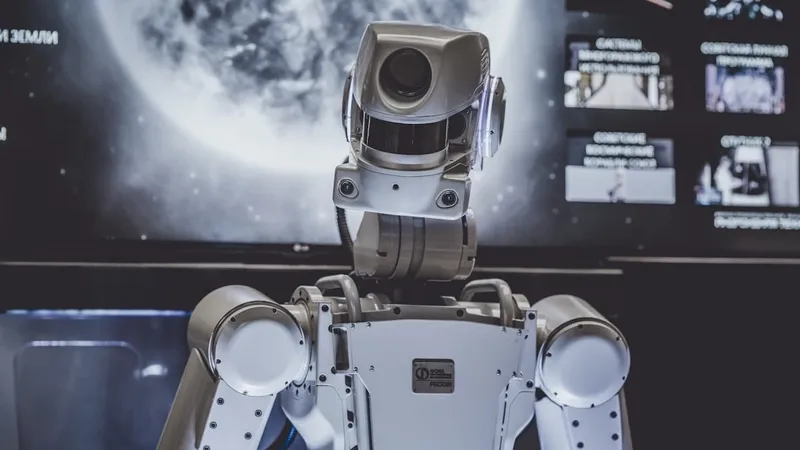
Machine learning has transformed from an academic curiosity into an essential skill for modern developers. In this comprehensive guide, we’ll explore everything you need to know to start your ML journey, from fundamental concepts to practical implementations.
What is Machine Learning?
Machine learning is a subset of artificial intelligence that enables computers to learn and improve from experience without being explicitly programmed. Unlike traditional programming where we write specific rules, in ML we provide data and let algorithms discover patterns automatically.
Traditional Programming vs Machine Learning
Traditional Programming:
Input + Rules → OutputMachine Learning:
Input + Output → Rules (Model)This paradigm shift is powerful. Instead of manually coding rules for spam detection, we show the algorithm thousands of emails labeled “spam” or “not spam,” and it learns to distinguish between them.
Real-World Applications
Machine learning powers many technologies we use daily:
- Email: Spam filtering, smart compose, priority inbox
- Social Media: Content recommendations, facial recognition
- E-commerce: Product recommendations, fraud detection
- Healthcare: Disease diagnosis, drug discovery
- Finance: Credit scoring, algorithmic trading
- Transportation: Self-driving cars, route optimization
Types of Machine Learning
Understanding the three main types of ML is crucial for choosing the right approach for your problem.
1. Supervised Learning
In supervised learning, we train algorithms using labeled data—input-output pairs where the correct answer is known.
Common Use Cases:
- Classification (spam detection, image recognition)
- Regression (price prediction, weather forecasting)
from sklearn.model_selection import train_test_split
from sklearn.linear_model import LogisticRegression
from sklearn.metrics import accuracy_score
import pandas as pd

# Load and prepare data
data = pd.read_csv('customer_data.csv')
X = data[['age', 'income', 'spending_score']]
y = data['will_purchase']

# Split into training and testing sets
X_train, X_test, y_train, y_test = train_test_split(
    X, y, test_size=0.2, random_state=42
)

# Train the model
model = LogisticRegression()
model.fit(X_train, y_train)

# Make predictions
predictions = model.predict(X_test)

# Evaluate accuracy
accuracy = accuracy_score(y_test, predictions)
print(f"Model Accuracy: {accuracy:.2%}")
Key Algorithms:
- Linear Regression
- Logistic Regression
- Decision Trees
- Random Forests
- Support Vector Machines (SVM)
- Neural Networks
2. Unsupervised Learning
Unsupervised learning works with unlabeled data, finding hidden patterns and structures without predefined categories.
Common Use Cases:
- Customer segmentation
- Anomaly detection
- Dimensionality reduction
- Topic modeling
from sklearn.cluster import KMeans
from sklearn.preprocessing import StandardScaler
import matplotlib.pyplot as plt

# Prepare data
scaler = StandardScaler()
X_scaled = scaler.fit_transform(X)

# Apply K-Means clustering
kmeans = KMeans(n_clusters=4, random_state=42)
clusters = kmeans.fit_predict(X_scaled)

# Visualize clusters
plt.figure(figsize=(10, 6))
plt.scatter(X_scaled[:, 0], X_scaled[:, 1], c=clusters, cmap='viridis')
plt.xlabel('Feature 1 (scaled)')
plt.ylabel('Feature 2 (scaled)')
plt.title('Customer Segments')
plt.colorbar(label='Cluster')
plt.show()
Key Algorithms:
- K-Means Clustering
- Hierarchical Clustering
- DBSCAN
- Principal Component Analysis (PCA)
- t-SNE
- Autoencoders
3. Reinforcement Learning
In reinforcement learning, an agent learns by interacting with an environment, receiving rewards or penalties based on its actions.
Common Use Cases:
- Game AI (Chess, Go, video games)
- Robotics
- Autonomous vehicles
- Resource optimization
import numpy as np

class SimpleQLearning:
    def __init__(self, states, actions, learning_rate=0.1, discount=0.95):
        self.q_table = np.zeros((states, actions))
        self.lr = learning_rate
        self.gamma = discount
        self.epsilon = 1.0  # Exploration rate

    def choose_action(self, state):
        if np.random.random() < self.epsilon:
            return np.random.randint(self.q_table.shape[1])
        return np.argmax(self.q_table[state])

    def learn(self, state, action, reward, next_state):
        current_q = self.q_table[state, action]
        max_next_q = np.max(self.q_table[next_state])
        new_q = current_q + self.lr * (reward + self.gamma * max_next_q - current_q)
        self.q_table[state, action] = new_q

    def decay_epsilon(self, decay_rate=0.995):
        self.epsilon = max(0.01, self.epsilon * decay_rate)
The Machine Learning Workflow
Every ML project follows a similar workflow. Understanding this process is essential for success.
Step 1: Problem Definition
Before writing any code, clearly define:
- What problem are you solving?
- What type of ML is appropriate? (supervised, unsupervised, reinforcement)
- What does success look like?
- What data do you need?
Step 2: Data Collection
Data is the fuel for machine learning. Sources include:
- Databases
- APIs
- Web scraping
- Sensors/IoT devices
- Public datasets (Kaggle, UCI Repository)
import pandas as pd
import requests

# From CSV
data = pd.read_csv('data.csv')

# From API
response = requests.get('https://api.example.com/data')
data = pd.DataFrame(response.json())

# From SQL
from sqlalchemy import create_engine
engine = create_engine('postgresql://user:pass@localhost/db')
data = pd.read_sql('SELECT * FROM customers', engine)
Step 3: Data Exploration and Preprocessing
Understanding your data is crucial. This phase often takes 60-80% of project time.
import pandas as pd
import numpy as np
import matplotlib.pyplot as plt
import seaborn as sns

# Load data
df = pd.read_csv('dataset.csv')

# Basic exploration
print(df.shape)                    # Dimensions
print(df.info())                   # Data types, null counts
print(df.describe())               # Statistics
print(df.isnull().sum())           # Missing values

# Visualize distributions
fig, axes = plt.subplots(2, 2, figsize=(12, 10))

# Histogram
axes[0, 0].hist(df['age'], bins=30, edgecolor='black')
axes[0, 0].set_title('Age Distribution')

# Box plot
axes[0, 1].boxplot(df['income'])
axes[0, 1].set_title('Income Box Plot')

# Correlation heatmap
sns.heatmap(df.corr(), annot=True, cmap='coolwarm', ax=axes[1, 0])
axes[1, 0].set_title('Correlation Matrix')

# Target distribution
df['target'].value_counts().plot(kind='bar', ax=axes[1, 1])
axes[1, 1].set_title('Target Distribution')

plt.tight_layout()
plt.show()
Data Preprocessing Steps:
from sklearn.preprocessing import StandardScaler, LabelEncoder
from sklearn.impute import SimpleImputer

# Handle missing values
imputer = SimpleImputer(strategy='median')
df['age'] = imputer.fit_transform(df[['age']])

# Encode categorical variables
le = LabelEncoder()
df['category_encoded'] = le.fit_transform(df['category'])

# One-hot encoding
df_encoded = pd.get_dummies(df, columns=['color', 'size'])

# Scale numerical features
scaler = StandardScaler()
numerical_cols = ['age', 'income', 'spending']
df[numerical_cols] = scaler.fit_transform(df[numerical_cols])

# Remove outliers (IQR method)
Q1 = df['income'].quantile(0.25)
Q3 = df['income'].quantile(0.75)
IQR = Q3 - Q1
df = df[~((df['income'] < Q1 - 1.5*IQR) | (df['income'] > Q3 + 1.5*IQR))]
Step 4: Feature Engineering
Creating meaningful features can dramatically improve model performance.
# Date features
df['date'] = pd.to_datetime(df['date'])
df['year'] = df['date'].dt.year
df['month'] = df['date'].dt.month
df['day_of_week'] = df['date'].dt.dayofweek
df['is_weekend'] = df['day_of_week'].isin([5, 6]).astype(int)

# Mathematical combinations
df['price_per_sqft'] = df['price'] / df['sqft']
df['rooms_density'] = df['rooms'] / df['sqft']

# Binning
df['age_group'] = pd.cut(df['age'],
                         bins=[0, 18, 35, 50, 65, 100],
                         labels=['child', 'young_adult', 'adult', 'middle_aged', 'senior'])

# Text features
df['description_length'] = df['description'].str.len()
df['word_count'] = df['description'].str.split().str.len()
Step 5: Model Selection and Training
Choose appropriate algorithms based on your problem and data.
from sklearn.model_selection import train_test_split, cross_val_score
from sklearn.linear_model import LogisticRegression
from sklearn.ensemble import RandomForestClassifier
from sklearn.svm import SVC
from sklearn.metrics import classification_report

# Split data
X_train, X_test, y_train, y_test = train_test_split(
    X, y, test_size=0.2, random_state=42, stratify=y
)

# Define models to compare
models = {
    'Logistic Regression': LogisticRegression(max_iter=1000),
    'Random Forest': RandomForestClassifier(n_estimators=100, random_state=42),
    'SVM': SVC(kernel='rbf', random_state=42)
}

# Train and evaluate each model
results = {}
for name, model in models.items():
    # Cross-validation
    cv_scores = cross_val_score(model, X_train, y_train, cv=5, scoring='accuracy')

    # Train on full training set
    model.fit(X_train, y_train)

    # Evaluate on test set
    test_score = model.score(X_test, y_test)

    results[name] = {
        'cv_mean': cv_scores.mean(),
        'cv_std': cv_scores.std(),
        'test_score': test_score
    }

    print(f"\n{name}:")
    print(f"  CV Score: {cv_scores.mean():.4f} (+/- {cv_scores.std()*2:.4f})")
    print(f"  Test Score: {test_score:.4f}")
Step 6: Hyperparameter Tuning
Optimize model parameters for better performance.
from sklearn.model_selection import GridSearchCV, RandomizedSearchCV

# Define parameter grid
param_grid = {
    'n_estimators': [50, 100, 200, 300],
    'max_depth': [None, 10, 20, 30],
    'min_samples_split': [2, 5, 10],
    'min_samples_leaf': [1, 2, 4]
}

# Grid search
grid_search = GridSearchCV(
    RandomForestClassifier(random_state=42),
    param_grid,
    cv=5,
    scoring='accuracy',
    n_jobs=-1,
    verbose=1
)

grid_search.fit(X_train, y_train)

print(f"Best Parameters: {grid_search.best_params_}")
print(f"Best CV Score: {grid_search.best_score_:.4f}")

# Use best model
best_model = grid_search.best_estimator_
test_score = best_model.score(X_test, y_test)
print(f"Test Score: {test_score:.4f}")
Step 7: Evaluation
Thoroughly evaluate your model before deployment.
from sklearn.metrics import (
    accuracy_score, precision_score, recall_score, f1_score,
    confusion_matrix, classification_report, roc_auc_score, roc_curve
)
import matplotlib.pyplot as plt

# Get predictions
y_pred = best_model.predict(X_test)
y_proba = best_model.predict_proba(X_test)[:, 1]

# Print classification report
print("Classification Report:")
print(classification_report(y_test, y_pred))

# Confusion matrix visualization
cm = confusion_matrix(y_test, y_pred)
plt.figure(figsize=(8, 6))
sns.heatmap(cm, annot=True, fmt='d', cmap='Blues')
plt.xlabel('Predicted')
plt.ylabel('Actual')
plt.title('Confusion Matrix')
plt.show()

# ROC curve
fpr, tpr, thresholds = roc_curve(y_test, y_proba)
auc_score = roc_auc_score(y_test, y_proba)

plt.figure(figsize=(8, 6))
plt.plot(fpr, tpr, label=f'ROC Curve (AUC = {auc_score:.3f})')
plt.plot([0, 1], [0, 1], 'k--', label='Random Classifier')
plt.xlabel('False Positive Rate')
plt.ylabel('True Positive Rate')
plt.title('ROC Curve')
plt.legend()
plt.show()
Step 8: Deployment
Deploy your model for real-world use.
import joblib

# Save model and preprocessors
joblib.dump(best_model, 'model.joblib')
joblib.dump(scaler, 'scaler.joblib')
joblib.dump(le, 'label_encoder.joblib')

# Load and use in production
def predict(input_data):
    # Load artifacts
    model = joblib.load('model.joblib')
    scaler = joblib.load('scaler.joblib')

    # Preprocess input
    input_scaled = scaler.transform(input_data)

    # Make prediction
    prediction = model.predict(input_scaled)
    probability = model.predict_proba(input_scaled)

    return prediction, probability
Essential Mathematics for ML
While libraries handle most math, understanding fundamentals helps with debugging and improvement.
Linear Algebra
import numpy as np

# Vectors and matrices
v = np.array([1, 2, 3])
M = np.array([[1, 2], [3, 4], [5, 6]])

# Dot product
dot = np.dot(v, v)

# Matrix multiplication
result = np.matmul(M, np.array([[1], [2]]))

# Transpose
M_T = M.T

# Inverse (for square matrices)
A = np.array([[1, 2], [3, 4]])
A_inv = np.linalg.inv(A)

# Eigenvalues and eigenvectors
eigenvalues, eigenvectors = np.linalg.eig(A)
Statistics and Probability
import numpy as np
from scipy import stats

data = np.random.normal(loc=50, scale=10, size=1000)

# Descriptive statistics
mean = np.mean(data)
median = np.median(data)
std = np.std(data)
variance = np.var(data)

# Probability distributions
normal_prob = stats.norm.pdf(50, loc=50, scale=10)

# Hypothesis testing
t_stat, p_value = stats.ttest_ind(sample1, sample2)

# Correlation
correlation = np.corrcoef(x, y)[0, 1]
Calculus (Gradient Descent)
def gradient_descent(X, y, learning_rate=0.01, iterations=1000):
    m, n = X.shape
    theta = np.zeros(n)

    for _ in range(iterations):
        # Predictions
        predictions = np.dot(X, theta)

        # Compute gradient
        errors = predictions - y
        gradient = (1/m) * np.dot(X.T, errors)

        # Update weights
        theta -= learning_rate * gradient

    return theta
Getting Started: Your First ML Project
Let’s build a complete project from scratch.
Project: Predicting Customer Churn
import pandas as pd
import numpy as np
from sklearn.model_selection import train_test_split
from sklearn.preprocessing import StandardScaler
from sklearn.ensemble import RandomForestClassifier
from sklearn.metrics import classification_report, roc_auc_score
import matplotlib.pyplot as plt

# 1. Load and explore data
df = pd.read_csv('customer_churn.csv')
print(df.head())
print(df.info())
print(df['churn'].value_counts())

# 2. Prepare features
X = df.drop(['customer_id', 'churn'], axis=1)
y = df['churn']

# Handle categorical columns
X = pd.get_dummies(X, drop_first=True)

# 3. Split data
X_train, X_test, y_train, y_test = train_test_split(
    X, y, test_size=0.2, random_state=42, stratify=y
)

# 4. Scale features
scaler = StandardScaler()
X_train_scaled = scaler.fit_transform(X_train)
X_test_scaled = scaler.transform(X_test)

# 5. Train model
model = RandomForestClassifier(n_estimators=100, random_state=42)
model.fit(X_train_scaled, y_train)

# 6. Evaluate
y_pred = model.predict(X_test_scaled)
y_proba = model.predict_proba(X_test_scaled)[:, 1]

print(classification_report(y_test, y_pred))
print(f"ROC-AUC Score: {roc_auc_score(y_test, y_proba):.4f}")

# 7. Feature importance
feature_importance = pd.DataFrame({
    'feature': X.columns,
    'importance': model.feature_importances_
}).sort_values('importance', ascending=False)

plt.figure(figsize=(10, 6))
plt.barh(feature_importance['feature'][:10], feature_importance['importance'][:10])
plt.xlabel('Importance')
plt.title('Top 10 Most Important Features')
plt.gca().invert_yaxis()
plt.show()
Recommended Learning Path
Phase 1: Foundations (2-4 weeks)
- Python programming proficiency
- NumPy and Pandas basics
- Basic statistics and probability
- Data visualization with Matplotlib/Seaborn
Phase 2: Core ML (4-8 weeks)
- Supervised learning algorithms
- Model evaluation metrics
- Feature engineering
- Scikit-learn mastery
Phase 3: Advanced Topics (8-12 weeks)
- Deep learning with PyTorch/TensorFlow
- Natural Language Processing
- Computer Vision
- Model deployment
Phase 4: Specialization (Ongoing)
- Choose a domain (NLP, CV, Recommender Systems)
- Kaggle competitions
- Real-world projects
- Research papers
Resources
Books
- “Hands-On Machine Learning” by Aurélien Géron
- “Pattern Recognition and Machine Learning” by Christopher Bishop
- “Deep Learning” by Goodfellow, Bengio, and Courville
Online Courses
- Andrew Ng’s Machine Learning (Coursera)
- Fast.ai Practical Deep Learning
- Stanford CS229
Practice Platforms
- Kaggle
- Google Colab
- Papers with Code
Conclusion
Machine learning is a journey, not a destination. Start with simple algorithms, understand them deeply, then progressively tackle more complex problems. The key is consistent practice with real datasets and projects.
In the next tutorial, we’ll dive deeper into neural networks and understand how deep learning has revolutionized AI.
Happy Learning!